
Summary of the TV program
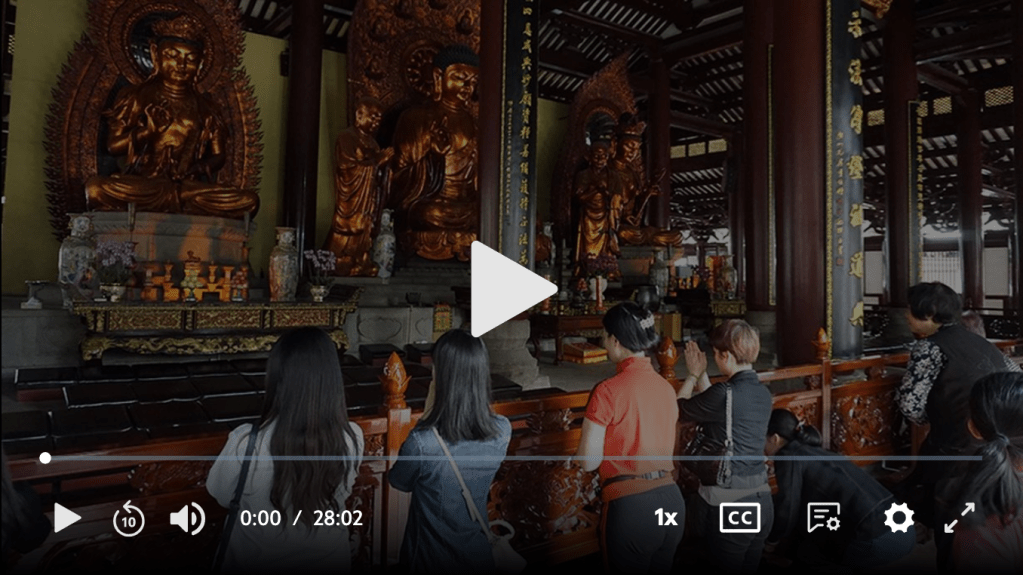
This special documentary explains the story of China and its maritime trade history. Beginning with the Qin and Han dynasties, China started its maritime trade because war violence made it harder to use the land routes. Using the sea routes to Persia, Africa, and the Middle East, China traded porcelain, tea, and silk in exchange for spices, ivory, and metals in the city of Guangzhou (Canton). With the rise of maritime technology, more travelers arrived in China, bringing with them different religions, such as Buddhism, Islam, and Christianity. During the Golden Age, under the Tang and Song dynasties, the rise of trade increased that China had to open a Bureau of Foreign Shipping in 1087 in the port city of Quanzhou. During this time, many foreign traders and clerics made Guangzhou and Quanzhou their new lasting home. Their tombstones and descendants are still around today.
Under the Ming Dynasty and its one-port mandate, all southern port cities besides Guangzhou were closed to foreign trade. In 1757, Guangzhou was the only port city opened for the new European and American traders, who wanted tea, porcelain and silk. At Guangzhou, huge storage facilities were built but were burned down due to the 1840 Opium Wars. Robert Morris, a British resident to Guangzhou, translated the first bible into Chinese and wrote the first Chinese-English dictionary. Since the 2000s, China has started a new economic project called “One Belt, One Road”, which was inspired by the old silk trade. From this project, many merchants from the old trading areas in Africa, the Middle East, Europe, Southeast Asia, and South Asia come to the Canton Fair to buy and be inspired by the new products sold there.
Interesting Tidbits
Although this video program did not go into specific details about the maritime trade, I did learn some interesting tidbits. One of them was the sea goddess, Mazu, who has no connection to any of the mainstream religions that were brought to Quanzhou. According to local folklore, Mazu was a Quanzhou resident who was respected in the community and swam well. After she died, the residents made her into a sea goddess and prayed to her for safe travels on the sea. Mazu is a reflection of how much the sea and maritime trade had on the lives of the Guangzhou and Quanzhou residents during Tang and Song dynasties. Another interesting tidbit is that because there was so much trade in Quanzhou, the Quanzhou government needed to open its first customs, which they named “Bureau of Foreign Shipping”, in 1087.
Connections to Guiding Question
Although this informative program mostly focused on the maritime trade and its multicultural effects it had on Guangzhou, this informative program did provide important political, economical, and social background information about the Chinese maritime trade, the goods the country exported, and the legacy this maritime trade still has in present China. When Quanzhou was mentioned, the program explained that Quanzhou became the home of maritime trade foreign merchants and what they left behind were artifacts, buildings, and living descendants, who still reside in the city. The program also provided me with names of important government buildings and folklore religions to help me with my research.
Waves of Fortune: China’s Maritime Silk Road [Television series episode]. (2017, October 12). In Waves of Fortune: China’s Maritime Silk Road. Guangzhou, China: PBS.

 My Content Resources