Becoming an Islamic Sea by Edward A. Alpers

Summary of Chapter

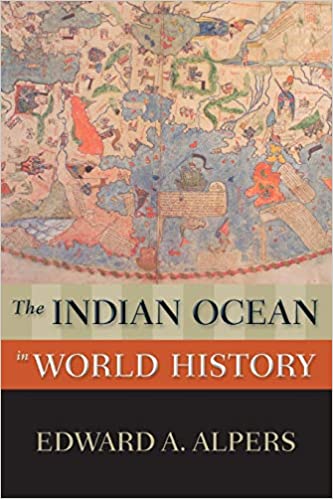
Edward A. Alphers (2013) explains how and why the Indian Ocean became a sea trade area dominated by Islam. After the death of the Prophet Muhammad, the Abbasid Dynasty (750AD – 1255AD) ruled over Baghdad and dominated the western Indian Ocean world. After state building, military expansion, and religious consolidation, the empire demanded luxury goods and encouraged their merchants to trade farther into the Indian Ocean. With blessing from the Qu’ran, their holy book, Muslim Arab-Persian merchants traveled along the coastlines converting the locals into Islam and settling into many maritime port cities. Due to these actions, Islam became a major religion in the Indian Ocean. Muslim traders from all over the Indian Ocean region felt united through “umma”, the community of believers. Although there was political and theological strife on land, Muslim merchants felt connected with other maritime merchants through the same religion, Islam; spoken language, Arabic; and governing law, Islamic law. Due to Islamic expansion, many Nestorian Christians, Persian Zoroastrians, and exile Muslims were pushed out of the Arab Peninsula and into the Indian Ocean to participate in maritime trade.

As the Islamic empire was developing and growing, South China (Nanhai) was also developing and growing. The connection that they built between each other formed a single Indian Ocean trading circuit. Many Arab-Persian merchants came to trade in Guangzhou. However, as the Tang Dynasty declined, these merchants faced violence from rebel leaders and corruption from politicians, so they fled to neighboring Srivijava (present-day Sumatra). During the Song dynasty, Srivijava was competing with their neighboring island, Java as the best trading area in Southeast Asia. Later, a Malay prince converted to Islam to help boost trade between his empire of Malaka and Muslim merchants. After his conversion, his empire rose politically, and in its heyday, ruled over both Srivijava and Java.

Interesting Tidbit

When Arab-Persians settled in the port cities in East Africa, many of them married with the local women and integrated into East African society. These merchants also promoted the East African export, gold. Linyi, a port city in Vietnam, was an important port city that frequently traded with China and Persia. However, they lost their power as a trade city when Arab-Persian merchants stopped traveling there in favor of traveling straight to Guangzhou, a much bigger trade port.

Connection to Guiding Question

Through my research, I have learned that Quanzhou became an important trade city because of economic pressure, high revenues due to trade, convenient geographical location, and political strife in northern China. However, I did not yet learn why Arab-Persians traveled to China. Through this chapter, I learned that foreign traders traveled to China because they were exiled from their homelands, were motivated by their leaders, who wanted more exotic items; and encouraged by their religion. Since almost every port city had a Muslim community who felt bounded by “umma”, it was easy and safe for Muslim merchants to trade and travel overseas. Therefore, this community tie encouraged more Muslims to travel, trade, and settle in a new city away from home.

Alpers, E. A. (2013). Becoming an Islamic Sea. In Title: The Indian Ocean in World History: New Oxford World History (p. 40- 68). New Oxford World History.
The Golden Age of Maritime Trade by Lincoln Paine

Summary of Chapter

In this chapter, Lincoln Paine (2013) describes the further rise of maritime trade in Quanzhou during the Yuan Dynasty and its decline during the Ming Dynasty. After helping the southern Song government defeat the northern Jin government, the Mongols attacked the Songs, but their horses were no match for Song warships. Once the Mongolian leader, Kublai Khan, adapted his forces for naval combat, he defeated the Songs and founded the Yuan Dynasty. As leader, Kublai Khan had bold maritime ambitions so he increased the naval army and developed maritime trade in the region. For his naval army, he demanded 2000 ships to be built, which decreased the amount of timber in China. To increase trade, he aimed to conquer Korea, Japan, and Java, but only was successful in conquering Korea. His defeat in Java lost him 20,000 Chinese sailors, who remained in Southeast Asia as prisoners of war. For trade, he improved navigation, dredged channels, built more warehouses, docks, and anchorages; erected lighthouses, and developed safer sea routes. His government lent ships to foreign merchants and split the profits 70:30. The government, of course, getting the higher share. From this rapid expansion of trade, navigational practices, including the early form of the compass and seaway charts, emerged.

In 1330s, the Yuan dynasty faced famine, plague, and repeated flooding, and therefore, was replaced by the Ming Dynasty. The Ming Dynasty’s leaders were native Chinese and sought a Sino-centric path. Under Taizu Ming, China prioritized border defense and protection against pirates over maritime trade. As Neo-Confucian believers, he and the Ming Dynasty did not prioritize technological advances in shipbuilding or sea navigation, financial institutions, or the legal protection of private property. Instead of open foreign trade, they focused on increasing Chinese prestige overseas. To encourage tributes to the emperor and eliminate trade competition with expatriate Chinese, the emperor sent Zheng He, a Muslim eunuch, and a fleet of hundred ships around the Indian Ocean. Zheng He went on many voyages. Although China was excited about Zhang He’s victory over pirates during his first voyage, they grew bored by his last voyage because China was too busy dealing with domestic issues, such as river floods, epidemics, currency depreciation, and preoccupied armies. In the 1430s, the Ming government prohibited Chinese ships and sailors from overseas travel, stopped building ships for overseas voyages, and abandoned coastal defense. Due to the decrease of oversea trade, many Chinese traders from Quanzhou abandoned China and moved permanently to Southeast Asia.

Interesting Tidbits

Before the Yuan Dynasty, Quanzhou was a multicultural city with foreign communities. According to written documents by visitors, the foreigners were split between the fair-skinned (Arabs and Persians) foreigners and the dark-skinned (Southeast Asian and Indian) foreigners. Second, Lincoln Paine points out that in 1292 Kublai Khan sent a Yuan princess (with 14 ships and Marco Polo) to Persia to wed a Persian prince, not by land – the typical Mongolian way- but by sea. Marco Polo reported this in his book, The Travels. Although China grew bored of oversea trade, the Zhang He’s voyages encouraged local rulers to start minting their own coins and adopt a coin/cash economy.

Connection to Guiding Questions

This chapter claims that Quanzhou’s multiculturalism supported its growth as well as its decline. Since the leaders of Yuan Dynasty were Mongols, their dynasty encouraged religious tolerance, overseas trade, and naval expansion. Because they had previous work experience with Arab-Persians, the Mongolian rulers favored foreign merchants over the Han Chinese, and gave them political, military, and economic power to rule over Quanzhou. After the Ming Dynasty retook China from Mongolians, they wanted China to go back to its “Chinese” ways, or in their case, Neo-Confucian ideals. They pretty much wanted to “Make China Great Again”. As a counterattack against the open trade policy of the Yuan Dynasty, the Ming Dynasty stopped overseas trade, alienated maritime merchants, and ignored their naval defense. Due to these trade restrictions, Quanzhou stopped being a major port city and many of its residents either moved to Southeast Asia to trade or moved to the mountains to farm. This chapter really paints a picture on how government policies can impact positively and negatively on international trade and cultural diversity in a region.

Paine, L. (2013). The golden age of maritime trade. In The Sea and Civilization: A Maritime History of the World (pp. 346-375). Random House.

The Most Globalized Place on Earth by Valerie Hansen

Summary of Chapter

Valerie Hansen (2020) describes the globalization and its effect on China. Under the Tang dynasty, eunuchs inspected foreign merchant ships’ cargo, selected what they wanted to buy for the royal courts, and then allowed the merchants to sell whatever was leftover. From the early Song to 1030, the emperor invited and continued the tribute system with trading partners. Later, the system halted and shifted to taxing foreign goods. Superintendents, who oversaw trade, taxed foreign merchant ships three times. The first tax was a 10-20% tax on the total cargo value of the ship. The second tax was a lowering of prices on luxury goods that only the Song government could buy. The third tax was on bulk goods, which could be sold directly to Chinese consumers. One port, Quanzhou, did not have a superintendent, but it still prospered through smuggling. Later, once a superintendent was assigned, this city surpassed Guangzhou in prosperity. This prosperity changed the lives of Fujian residents. Many stopped farming subsistence items in favor of cash crops such as lychee, sugarcane, and hemp. Most farmers bought food from the markets, or quit farming to work in the mines, to fish, or to harvest ocean salt. 5-10% of Fujian population of 5 million were involved in manufacturing of ceramics.

The biggest and most fashionable import from overseas was aromatics or scented woods. Regardless of their socioeconomic class, everyone in China purchased or used aromatics in the daily lives. They used them to fragrant their houses, clothing, and their bodies. They were used in drinks, snacks, and foods. They were included in their medicines. The wealthy consumed large qualities of them and used them to display their wealth. Emperors created their own brand of incense. Chinese merchants experimented with multiple scents to improve the taste of snacks, which were bought even by the poorest of customers. A rebellion in Central China was caused because the locals did not like how the government made them buy aromatics in large quantities.

Interesting Tidbits

There were a lot of interesting trivia included in this chapter about maritime trade and the impact of China’s participation. One trivia point is that Chinese coins were circulated and used as currency in Japan and Java during this time period. Also, under the Yuan Dynasty, Chinese learned more about the geography of Southeast Asia as well as new navigational technology. However, they all thought the world ended beyond the Philippines and that any ship there will just drain out. Therefore, Chinese navigators did not explore the area beyond the Philippines.

Connection to Guiding Question

This chapter’s main focus was the impact of aromatics had on the lives of Chinese under the Song and Yuan dynasties. Aromatics, like scented woods, were not a Chinese local item. They came from trade with Southeast Asia and Indian. Chinese people used them as perfumes, as flavors for their snacks, and as medicines. They were a product everyone used. In exchange for aromatics, they traded ceramics, silk, metals, cash crops, and other materials. Since oversea countries wanted those products, Fujian province focused their economy on those items. About everyone in Fujian was involved in the growing, mining, and manufacturing of exports. Globalization affected the Quanzhou and its province of Fujian.

Hansen, V. (2020). The most globalized place on Earth. In The Year 1000: When Explorers Connected the World. Scribner.

The Quanzhou Ship by Jun Kimura

Summary of the Chapter

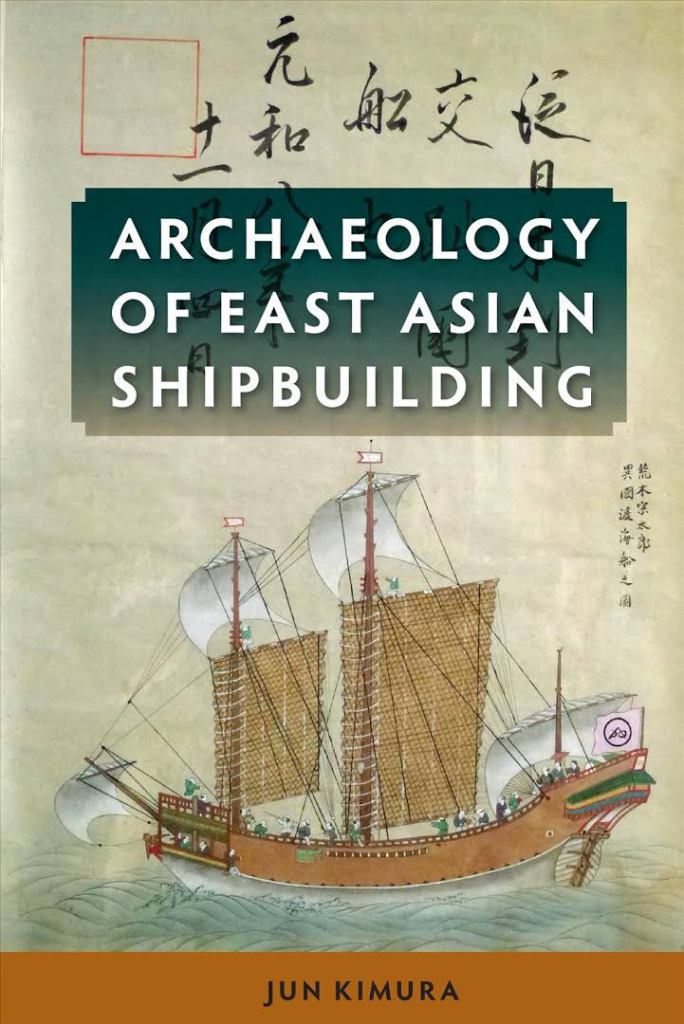
In the fourth chapter of the book, Archaeology of East Asian shipbuilding, Jun Kimura (2016) describes the construction and discovery of the sunken merchant ship found in the tidal mud flats off the Honzhu Harbour in the 1970s. Honzhu Harbor is one of the two harbors of Quanzhou city. The other one is Fashi. Archaeologists found that it was a ship constructed in the early 1270s under the Yuan Dynasty and sunk in mid-1270s. Maritime trade commodities were found in its cargo. The cargo contained scented woods and spices like pepper. The Chinese ceramics from the Song and Yuan dynasty that it had on board identified it as an Asian merchant ship. Through inspection, the ship was fairly new when it sunk and had no signs of repair. The cargo carrying capacity of this ship was around 200 metric tons. It could carry 50 people and some livestock. The design of the stowage space is suitable for small cargo items.

For the construction of the ship, Jun Kimura explains that the keel, the longitudinal structure along the centerline of the bottom of the vessel, was around 18 meters. He also mentions that the Chinese tradition of bao shou kong, which was the tradition of placing seven coins or coin holes with bronze mirror, was used in the scarf between the forward keel and mail keel. The characteristics of the bow and stern on this ship held general characteristics of Chinese warcraft. He continues that the ship’s haul planking demonstrated a complex structure and consisted of double and in part triple layered planking. Iron nails, not wood nails, were driven down diagonally and used to fasten the planks. Putty was used to protect the iron nails from erosion. The ship demonstrated an early use of iron clamps to tighten the plank tiers, which is a common Chinese ship building technique.

Interesting Tidbits

This chapter mentions that only 1% of the cargo remained on the ship. It could have been saved or taken before the sunken ship’s discovery in the 1970s. Wooden inked strips were found near the cargo on the ship. Archaeologists expect that they are tags to label the ship’s cargo. In addition to the cargo that was found on the ship, they found carpentry tools, ivory chess pieces, and chopsticks, which they expect were the crew’s personal items. I guess when the crew was on that ship, they ate with chopsticks, played chess, and used the carpentry tools to fix the ship if the ship needed some quick repairs.

Connection to Guiding Questions

This chapters answers my second question about the impact of multiculturalism or foreign traders had on Quanzhou. Because trade between foreign merchants and local Quanzhou Chinese residents was important investment in Quanzhou and the rest of China, Quanzhou spent a lot of time building trade ships. Many of these ships were privately owned by wealthy merchants. These wealthy merchants were also political leaders of the Muslim community. These ships had to be built to last long journeys and to protect their cargo. This sunken ship that was found is an example of one of those ships. Its cargo gave evidence of what was exported and imported. Its construction gave insight to the technology and craftsmanship of maritime shipbuilding.

Kimura, J. (2016). Quanzhou Ship. In J. Kimura (Author), Archaeology of east Asian shipbuilding (pp. 69-102). University Press of Florida. https://doi.org/10.1111/1095-9270.12215

Development of Maritime Trade by Jung-pang Lo

Summary of Book Chapter

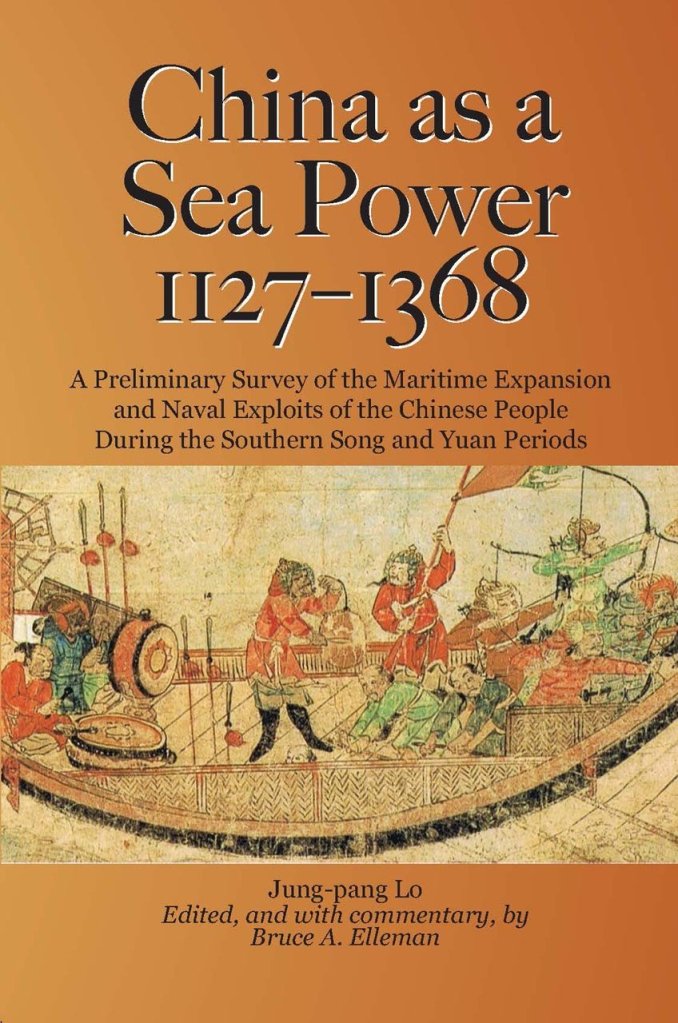
In this chapter, Jung-pang Lo (2012) explains the reasons for the rise of maritime trade in China. During the Tang and Song dynasties, there was a huge mass movement of Chinese people from Northern China to Fujian because of impoverish soil, oppression of alien rule, foreign invasions, and civil commotions. Since the new southern government could no longer rely on the agrarian economy to gather revenue, they embraced trade and commerce. With the increase of production and the low prices of ceramics, textiles, and paper, more merchants were able to sell more products and more common people were able to buy it. Since the government taxed both the production and traded items, government reaped a lot in tax revenues. Since the government needed money to protect and delay invasions from the northern invaders, they favored strengthening their naval forces and their influence on trade instead on their Neo-Confucius ideas of a self-efficient China. They also restricted some imports from the general public because they needed the imports for trade with northern aliens as well as for naval defense. One such import was steel and that was used for swords and shipbuilding. Also, some expatriate merchants would donated and sold their ships (and crew) to the government to help with the government’s defense.

The Song Dynasty founder encouraged maritime commerce and the opening of ports. For every Chinese port city, he established a superintendency of merchant ships office. The functions of this office was to handle the affairs of foreign merchants, inspect foreign ships, levy duties on imports, supervise Chinese merchants who went abroad, and license their ships. The officials of this office listened to merchant complaints and some sent requests to the government to reduce their grievances. Most of the time the government granted their request. To increase trade, the government wanted foreign merchants to think that China was an attractive place to trade their goods. They aided shipwrecked foreign sailors, weakened Chinese laws for lawbreaking foreigners, and offered influential merchants government positions. Also, if any merchants were able to get a large number of foreign traders to ship goods to China, the government would give them official ranks. Lastly, in order to manage their monopolies on trade, the government would ask merchants to transport and retail government items (tea, alcohol, and aromatics) to the masses.

Interesting Tidbits

One fact that I found interesting was that Emperor Gaozung first found foreign goods to be useless and wasteful luxuries, but once he realized how huge his profits were from trade, he changed his mind and encouraged maritime trade. Another fact was that Southern China was known for typhoons, storms, mud, rivers, and shallow waters. Although these waters were connected to many places, it was difficult to maneuver with a ship. Therefore, thanks to the considerable development in water control and land reclamation, these southern port cities were able to make it more ship accessible.

Connection to Guiding Question

This chapter answered my first question as to why Quanzhou became a trade city and therefore a multicultural city. Alien invaders invaded Northern China, so the government, who lost their capital in the north, had to reclaim their lost power by moving south. To protect their new borders and to keep their invaders at bay, the government needed money and goods. Maritime trade provided them with that revenue. By opening more ports, managing trade, and welcoming traders to China, the government increased their revenue as well as the port cities’ wealth in cultural and religious diversity.

Lo, J.-P. (2012). Development of maritime trade. In B. A. Elleman (Ed.), China as a Sea Power, 1127-1368 (pp. 186-208). NUS Press.