
Summary of Chapter
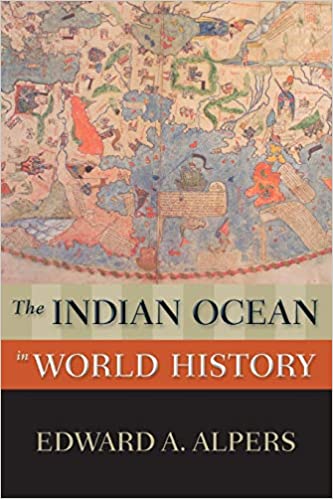
Edward A. Alphers (2013) explains how and why the Indian Ocean became a sea trade area dominated by Islam. After the death of the Prophet Muhammad, the Abbasid Dynasty (750AD – 1255AD) ruled over Baghdad and dominated the western Indian Ocean world. After state building, military expansion, and religious consolidation, the empire demanded luxury goods and encouraged their merchants to trade farther into the Indian Ocean. With blessing from the Qu’ran, their holy book, Muslim Arab-Persian merchants traveled along the coastlines converting the locals into Islam and settling into many maritime port cities. Due to these actions, Islam became a major religion in the Indian Ocean. Muslim traders from all over the Indian Ocean region felt united through “umma”, the community of believers. Although there was political and theological strife on land, Muslim merchants felt connected with other maritime merchants through the same religion, Islam; spoken language, Arabic; and governing law, Islamic law. Due to Islamic expansion, many Nestorian Christians, Persian Zoroastrians, and exile Muslims were pushed out of the Arab Peninsula and into the Indian Ocean to participate in maritime trade.
As the Islamic empire was developing and growing, South China (Nanhai) was also developing and growing. The connection that they built between each other formed a single Indian Ocean trading circuit. Many Arab-Persian merchants came to trade in Guangzhou. However, as the Tang Dynasty declined, these merchants faced violence from rebel leaders and corruption from politicians, so they fled to neighboring Srivijava (present-day Sumatra). During the Song dynasty, Srivijava was competing with their neighboring island, Java as the best trading area in Southeast Asia. Later, a Malay prince converted to Islam to help boost trade between his empire of Malaka and Muslim merchants. After his conversion, his empire rose politically, and in its heyday, ruled over both Srivijava and Java.
Interesting Tidbit
When Arab-Persians settled in the port cities in East Africa, many of them married with the local women and integrated into East African society. These merchants also promoted the East African export, gold. Linyi, a port city in Vietnam, was an important port city that frequently traded with China and Persia. However, they lost their power as a trade city when Arab-Persian merchants stopped traveling there in favor of traveling straight to Guangzhou, a much bigger trade port.
Connection to Guiding Question
Through my research, I have learned that Quanzhou became an important trade city because of economic pressure, high revenues due to trade, convenient geographical location, and political strife in northern China. However, I did not yet learn why Arab-Persians traveled to China. Through this chapter, I learned that foreign traders traveled to China because they were exiled from their homelands, were motivated by their leaders, who wanted more exotic items; and encouraged by their religion. Since almost every port city had a Muslim community who felt bounded by “umma”, it was easy and safe for Muslim merchants to trade and travel overseas. Therefore, this community tie encouraged more Muslims to travel, trade, and settle in a new city away from home.
Alpers, E. A. (2013). Becoming an Islamic Sea. In Title: The Indian Ocean in World History: New Oxford World History (p. 40- 68). New Oxford World History.

 My Content Resources