Muslims and Hindus in the Culture and Morphology of Quanzhou from the Tenth to the Thirteenth Century by Hugh R. Clark

Summary of Article

Hugh R Clark (1995) explains that the presence of Muslim and Hindu communities and the religions they brought with them affected the culture and economy of Quanzhou from the 11th to the 13th century. The Muslim community that arrived to Quanzhou from West Asia became the dominant foreign community in Quanzhou during the late Song and Yuan dynasty. After the establishment of the Superintendent Trade Office in 1087, this community experienced a growth in numbers and in wealth. This growth was “reflected in the expanded growth it provided for itself, such as mosques and graveywards” (p.62). Shinawei, a devoted patron of this community, was known to take public interest for his fellow traders and bought land to establish a Muslim cemetery. Communities of foreign merchants from South and Southeast Asia had members that shared an “Indianized” culture. These communities included Tamil speakers, who left Tamil inscriptions on stone tablets, and a Shiva cult, who had enough influence to build the “Stone Bamboo Shoot” and to leave Shiva carvings on the walls of the Kaiyuan Temple.

In the beginning of the Song dynasty, Quanzhou was not a legal port for overseas trade. Merchants could only trade legally in Guangzhou. However, since it was cheaper to trade illegally in Quanzhou than trade legally in Guangzhou, trade in Quanzhou began to grow and the government started to lose money. Due to this growth of illegal trade, the Song dynasty was forced to legalize trade by setting up a Superintendent of Trade office in Quanzhou. In addition, the introduction of cotton and Champa rice that China received through trade with Southeast Asia helped revolutionize China’s agriculture. Because of the expansion of trade within and overseas, Fujian economy changed from cultivation of rice and cotton to “export orientated economy producing luxury fruits” (p. 70). Lastly, due to prominence of overseas trade in Quanzhou and Fujian, the once looked down merchant profession was gradually being accepted by the elite society. “Social contact between merchants and gentry became the norm” (p. 71).

Interesting Tidbits

In this article, I learned a lot about the rise of Quanzhou as major trade port. Since China’s start in the maritime trade, Guangzhou, Quanzhou’s rival port city, was already an established port and had the largest foreign community in China. Under the Tang dynasty, Quanzhou was established as a port city, but due to its dangerous environment, not many people wanted to go there. However, due to the riots and massacres of the foreign communities in Guangzhou by the rebel leader, Huang Chao, many foreigners left Guangzhou and moved to either Quanzhou or other port cities in Southeast Asia. Another interesting tidbit is that Champa rice was introduced to Fujian peasants from the Mekong Delta. This rice was adopted because it grew really well in famine and drought areas. (Fujian relied on trade due to famine and drought in its rural areas.) As years went by, Fujian peasants developed new rice-growing techniques to improve the taste and quality of the rice. Later, their practices became the foundation for Chinese rice-based culinary traditions.

Connection to Guiding Question

This article explained that Quanzhou’s foreign community impacted the city and its surroundings areas culturally and economically. First, since foreign traders made Quanzhou a prosperous port city through illegal trade, the Song government was forced to make Quanzhou an official trade port. Second, Muslims and other foreign communities made Quanzhou a more trade-friendly city. Since wealthy and influential non-Chinese residents took a pubic interest in the welfare of other foreign merchants, their roles in Quanzhou’s maritime trade became more political. Lastly, the imported products such as rice and cotton changed the agricultural and culinary traditions of China.

Clark, H. R. (1995). Muslims and Hindus in the culture and morphology of Quanzhou from the tenth to the thirteenth century. Journal of World History, 6(1), 49-74. Retrieved from: https://www.thewha.org/
Quanzhou Archaeology: A Brief Review by Richard Pearson

Summary of Article

This article explains how the artifacts, buildings, and sunken ships discovered at Quanzhou demonstrates the impact that foreign residents had on Quanzhou’s culture and economy. First, Richard Pearson (2002) explains how religiously diverse and tolerant Quanzhou was through its various religious buildings. Built during the Song and Yuan Dynasty, the Kaiyuansi Temple, the most prominent Buddhist temple in Quanzhou, provides evidence of an Indian origin with two Brahman-style pagodas and a pair of square columns filled with ancient Indian myth carvings. Hindu architectural and sculptural fragments with illustrations of Hindu mythology and motifs is found along the Tonghuai gate and demonstrates the likelihood that there was a Hindu temple and community. In 1956, a discovery of inscriptions confirmed a presence of a Tamil-speaking merchant community. A Manichean temple with its stone representation of Mani is the only Manichaen temple to survive after centuries of religious persecution and extinction. Although discovered artifacts proves that there were once six mosques in Quanzhou, only Ashab Mosque (Shengyousi) survives. At this mosque, there are two inscribed stone tablets that have both Arabic and Chinese inscriptions. Discovered tombstones mentions individuals from Turkestan, Persia, Yemen, and Armenia. Later, the Ming and later dynasties used these tombstones to rebuild defensive walls and gates. A few tombstones depicting Christian motifs are considered to be gravestones for Nestorian and Franciscan Christians.

The Houzhu ship is a sunken merchant ship that was found off the coast of Quanzhou Bay. Archaeologists claim that the ship was built locally and was privately own by the powerful merchant, Pu Shougeng, during the late Song and early Yuan dynasties. The ship’s cargo includes vast amounts of scented woods, spices, and medicinal products. They also mention that the cargo was owned by a collection of traders: the ship owner, the crew, the passengers, and the government, who had ordered these goods. Buddhist monks of Kaiyuansi Temple sponsored the building of the Luoyang Wan’an bridge, which stands on the Jin River that links Quanzhou to its ceramic factories. Kiln sites located near Quanzhou showed an increase of ceramic productions during the Yuan dynasty due to the introduction of saggers. Saggers increase the scale of production and efficiency while also increasing labor input.

Interesting Tidbits

The article mentions that the “Gravestone of Ahman”, an example of acculturation in Quanzhou, contains Persian, Arabic, and Chinese inscriptions. The inscriptions explain that the patriarch of the Ahman family was a foreign merchant who married a local Quanzhou girl. The Ahman family’s younger generations spoke Chinese and lived in Quanzhou for generations. The gravestone also demonstrates a mixture of Persian and Chinese customs.

Connection to Guiding Questions

This article explains the impact of Muslims, Hindus, and other foreign settlers had on the economy and culture of Quanzhou during the Song and Yuan dynasties. First, the settlers impacted the city’s culture because they had created their own stamp on the city by building religious centers and buying land for cemeteries. They also sponsored infrastructure projects. These settlers were also highly involved in maritime trade, which was the main focus of Quanzhou’s economy. This multiculturalism still influences Quanzhou today because the current local culture is a mix between these foreign settlers’ customs and the local Chinese traditions.

Pearson, R., Li, M., & Li, G. (2002). Quanzhou archaeology: A brief review. International Journal of Historical Archaelogy, 6(1), 23-59. https://doi.org/10.1023/A:1014881309593

Pu Shougeng Reconsidered: Pu, His Family, and Their Role in the Maritime Trade of Quanzhou by John W. Chaffee

Summary of Article

John W. Chaffee (2017) tells the story of a cultural assimilated Muslim, Pu Shougeng, and his role in the maritime trade of Quanzhou under the Song and Yuan Dynasty. Pu Shougeng’s family were successful Muslim traders from the “Western Regions” who made their fortune first in Guangzhou and then in Quanzhou. For thirty years, Pu Shougeng dominated the maritime trade and held many political leadership roles such as superintendent. He is most known for his surrendering of Quanzhou to Mongols, the leaders of Yuan Dynasty, in 1276. With the support of Emperor Qubilai, Pu Shougeng became the prime political, military, and economic leader in Quanzhou. He was admired for his knowledge about Chinese maritime trading as well as handling foreign affairs of foreign merchants.

Like their father, his sons also had an impact on the political affairs of China. His oldest kept foreign trade routes safe and managed foreign affairs as Fujian Maritime Trade Superintendent. His second son proposed the restoration of examinations while his third son drafted an imperial declaration that supported Confucian beliefs. His brother’s son, Pu Rihe, took part in the restoration of Quanzhou’s Qingjin Mosque. However, their legacy was cut short in the late Yuan period. A long military conflict between foreign Muslims and widespread riots led to Pu family’s decline. Later, the Ming emperor blacklisted the Pu family because he considered Shougeng’s most famous act as a traitorous act towards the Song dynasty.

Interesting Tidbits

While reading this article, I was surprised how influential the role that Pu Shougeng played as a non-Chinese resident in Quanzhou. He controlled the maritime trade in Quanzhou, played a role in protecting borders against the pirates, and spoke directly to the Yuan emperor. Although backed by the 1% of Quanzhou, he is the one who did and later was blamed for the surrender of Quanzhou to Mongols. Another interesting tidbit that I found interesting is that according to historians and John Chaffee, many tribute envoys like Shougeng’s family adopted the last name “Pu” because it was close to the last name “Abu”.

Connection to Guiding Questions

The article helped answer my guiding question because it provides an example and a name of a foreign merchant who politically and socially impacted Quanzhou and its role in maritime trade. Pu Shougeng was a political voice of Quanzhou. He took on leadership roles in the community and communicated directly with the Yuan emperors. He and his sons were involved in making sure Quanzhou remained open and safe for trade with non-Chinese merchants. His family made personal connections with successful foreign merchants including marrying into their families. His role in Quanzhou demonstrated the large impact the Muslim community had in Quanzhou during the open trade policies of Song and Yuan as well as the decline of that power during the xenophobia of the Ming Dynasty.

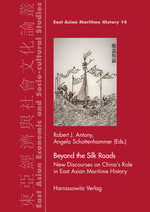
Antony, R. J., & Schottenhammer, A. (2017). Pu Shougeng Reconsidered: Pu, His Family, and Their Role in the Maritime Trade of Quanzhou. In Beyond the Silk Roads: New discourses on China’s role in East Asian maritime history (pp. 63-75). Wiesbaden, Germany: Harrassowitz Verlag. doi:http://www.jstor.com/stable/j.ctvckq3m6.8