The Quanzhou Ship by Jun Kimura

Summary of the Chapter
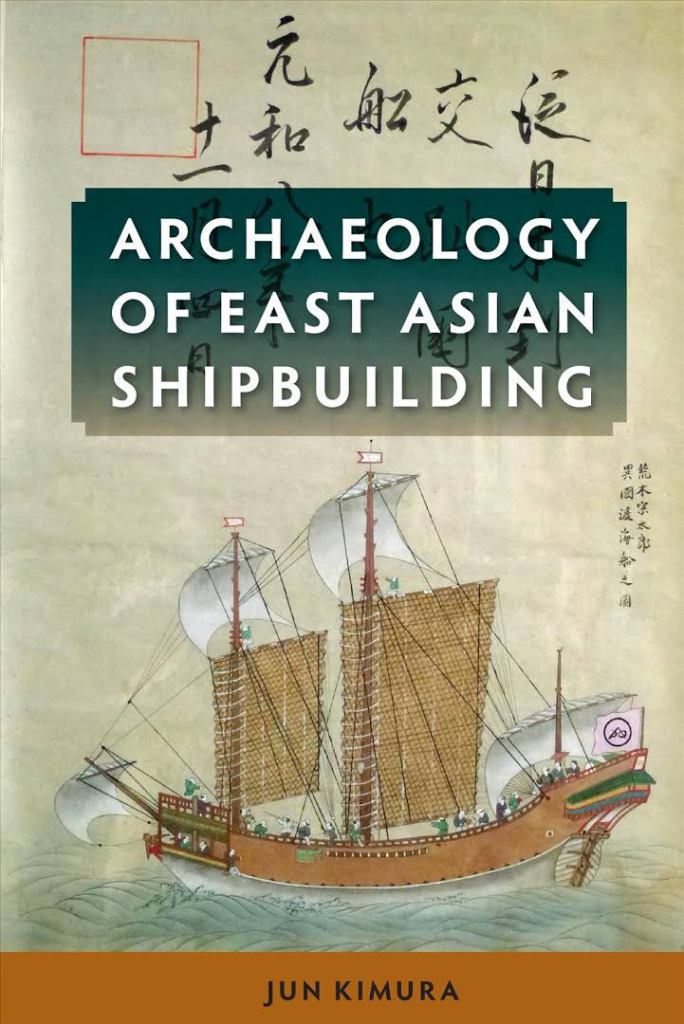
In the fourth chapter of the book, Archaeology of East Asian shipbuilding, Jun Kimura (2016) describes the construction and discovery of the sunken merchant ship found in the tidal mud flats off the Honzhu Harbour in the 1970s. Honzhu Harbor is one of the two harbors of Quanzhou city. The other one is Fashi. Archaeologists found that it was a ship constructed in the early 1270s under the Yuan Dynasty and sunk in mid-1270s. Maritime trade commodities were found in its cargo. The cargo contained scented woods and spices like pepper. The Chinese ceramics from the Song and Yuan dynasty that it had on board identified it as an Asian merchant ship. Through inspection, the ship was fairly new when it sunk and had no signs of repair. The cargo carrying capacity of this ship was around 200 metric tons. It could carry 50 people and some livestock. The design of the stowage space is suitable for small cargo items.

For the construction of the ship, Jun Kimura explains that the keel, the longitudinal structure along the centerline of the bottom of the vessel, was around 18 meters. He also mentions that the Chinese tradition of bao shou kong, which was the tradition of placing seven coins or coin holes with bronze mirror, was used in the scarf between the forward keel and mail keel. The characteristics of the bow and stern on this ship held general characteristics of Chinese warcraft. He continues that the ship’s haul planking demonstrated a complex structure and consisted of double and in part triple layered planking. Iron nails, not wood nails, were driven down diagonally and used to fasten the planks. Putty was used to protect the iron nails from erosion. The ship demonstrated an early use of iron clamps to tighten the plank tiers, which is a common Chinese ship building technique.

Interesting Tidbits

This chapter mentions that only 1% of the cargo remained on the ship. It could have been saved or taken before the sunken ship’s discovery in the 1970s. Wooden inked strips were found near the cargo on the ship. Archaeologists expect that they are tags to label the ship’s cargo. In addition to the cargo that was found on the ship, they found carpentry tools, ivory chess pieces, and chopsticks, which they expect were the crew’s personal items. I guess when the crew was on that ship, they ate with chopsticks, played chess, and used the carpentry tools to fix the ship if the ship needed some quick repairs.

Connection to Guiding Questions

This chapters answers my second question about the impact of multiculturalism or foreign traders had on Quanzhou. Because trade between foreign merchants and local Quanzhou Chinese residents was important investment in Quanzhou and the rest of China, Quanzhou spent a lot of time building trade ships. Many of these ships were privately owned by wealthy merchants. These wealthy merchants were also political leaders of the Muslim community. These ships had to be built to last long journeys and to protect their cargo. This sunken ship that was found is an example of one of those ships. Its cargo gave evidence of what was exported and imported. Its construction gave insight to the technology and craftsmanship of maritime shipbuilding.

Kimura, J. (2016). Quanzhou Ship. In J. Kimura (Author), Archaeology of east Asian shipbuilding (pp. 69-102). University Press of Florida. https://doi.org/10.1111/1095-9270.12215
Quanzhou Archaeology: A Brief Review by Richard Pearson

Summary of Article

This article explains how the artifacts, buildings, and sunken ships discovered at Quanzhou demonstrates the impact that foreign residents had on Quanzhou’s culture and economy. First, Richard Pearson (2002) explains how religiously diverse and tolerant Quanzhou was through its various religious buildings. Built during the Song and Yuan Dynasty, the Kaiyuansi Temple, the most prominent Buddhist temple in Quanzhou, provides evidence of an Indian origin with two Brahman-style pagodas and a pair of square columns filled with ancient Indian myth carvings. Hindu architectural and sculptural fragments with illustrations of Hindu mythology and motifs is found along the Tonghuai gate and demonstrates the likelihood that there was a Hindu temple and community. In 1956, a discovery of inscriptions confirmed a presence of a Tamil-speaking merchant community. A Manichean temple with its stone representation of Mani is the only Manichaen temple to survive after centuries of religious persecution and extinction. Although discovered artifacts proves that there were once six mosques in Quanzhou, only Ashab Mosque (Shengyousi) survives. At this mosque, there are two inscribed stone tablets that have both Arabic and Chinese inscriptions. Discovered tombstones mentions individuals from Turkestan, Persia, Yemen, and Armenia. Later, the Ming and later dynasties used these tombstones to rebuild defensive walls and gates. A few tombstones depicting Christian motifs are considered to be gravestones for Nestorian and Franciscan Christians.

The Houzhu ship is a sunken merchant ship that was found off the coast of Quanzhou Bay. Archaeologists claim that the ship was built locally and was privately own by the powerful merchant, Pu Shougeng, during the late Song and early Yuan dynasties. The ship’s cargo includes vast amounts of scented woods, spices, and medicinal products. They also mention that the cargo was owned by a collection of traders: the ship owner, the crew, the passengers, and the government, who had ordered these goods. Buddhist monks of Kaiyuansi Temple sponsored the building of the Luoyang Wan’an bridge, which stands on the Jin River that links Quanzhou to its ceramic factories. Kiln sites located near Quanzhou showed an increase of ceramic productions during the Yuan dynasty due to the introduction of saggers. Saggers increase the scale of production and efficiency while also increasing labor input.

Interesting Tidbits

The article mentions that the “Gravestone of Ahman”, an example of acculturation in Quanzhou, contains Persian, Arabic, and Chinese inscriptions. The inscriptions explain that the patriarch of the Ahman family was a foreign merchant who married a local Quanzhou girl. The Ahman family’s younger generations spoke Chinese and lived in Quanzhou for generations. The gravestone also demonstrates a mixture of Persian and Chinese customs.

Connection to Guiding Questions

This article explains the impact of Muslims, Hindus, and other foreign settlers had on the economy and culture of Quanzhou during the Song and Yuan dynasties. First, the settlers impacted the city’s culture because they had created their own stamp on the city by building religious centers and buying land for cemeteries. They also sponsored infrastructure projects. These settlers were also highly involved in maritime trade, which was the main focus of Quanzhou’s economy. This multiculturalism still influences Quanzhou today because the current local culture is a mix between these foreign settlers’ customs and the local Chinese traditions.

Pearson, R., Li, M., & Li, G. (2002). Quanzhou archaeology: A brief review. International Journal of Historical Archaelogy, 6(1), 23-59. https://doi.org/10.1023/A:1014881309593