Summary of Article
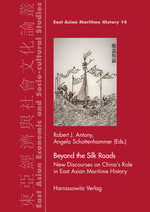
John W. Chaffee (2017) tells the story of a cultural assimilated Muslim, Pu Shougeng, and his role in the maritime trade of Quanzhou under the Song and Yuan Dynasty. Pu Shougeng’s family were successful Muslim traders from the “Western Regions” who made their fortune first in Guangzhou and then in Quanzhou. For thirty years, Pu Shougeng dominated the maritime trade and held many political leadership roles such as superintendent. He is most known for his surrendering of Quanzhou to Mongols, the leaders of Yuan Dynasty, in 1276. With the support of Emperor Qubilai, Pu Shougeng became the prime political, military, and economic leader in Quanzhou. He was admired for his knowledge about Chinese maritime trading as well as handling foreign affairs of foreign merchants.
Like their father, his sons also had an impact on the political affairs of China. His oldest kept foreign trade routes safe and managed foreign affairs as Fujian Maritime Trade Superintendent. His second son proposed the restoration of examinations while his third son drafted an imperial declaration that supported Confucian beliefs. His brother’s son, Pu Rihe, took part in the restoration of Quanzhou’s Qingjin Mosque. However, their legacy was cut short in the late Yuan period. A long military conflict between foreign Muslims and widespread riots led to Pu family’s decline. Later, the Ming emperor blacklisted the Pu family because he considered Shougeng’s most famous act as a traitorous act towards the Song dynasty.
Interesting Tidbits
While reading this article, I was surprised how influential the role that Pu Shougeng played as a non-Chinese resident in Quanzhou. He controlled the maritime trade in Quanzhou, played a role in protecting borders against the pirates, and spoke directly to the Yuan emperor. Although backed by the 1% of Quanzhou, he is the one who did and later was blamed for the surrender of Quanzhou to Mongols. Another interesting tidbit that I found interesting is that according to historians and John Chaffee, many tribute envoys like Shougeng’s family adopted the last name “Pu” because it was close to the last name “Abu”.
Connection to Guiding Questions
The article helped answer my guiding question because it provides an example and a name of a foreign merchant who politically and socially impacted Quanzhou and its role in maritime trade. Pu Shougeng was a political voice of Quanzhou. He took on leadership roles in the community and communicated directly with the Yuan emperors. He and his sons were involved in making sure Quanzhou remained open and safe for trade with non-Chinese merchants. His family made personal connections with successful foreign merchants including marrying into their families. His role in Quanzhou demonstrated the large impact the Muslim community had in Quanzhou during the open trade policies of Song and Yuan as well as the decline of that power during the xenophobia of the Ming Dynasty.
Antony, R. J., & Schottenhammer, A. (2017). Pu Shougeng Reconsidered: Pu, His Family, and Their Role in the Maritime Trade of Quanzhou. In Beyond the Silk Roads: New discourses on China’s role in East Asian maritime history (pp. 63-75). Wiesbaden, Germany: Harrassowitz Verlag. doi:http://www.jstor.com/stable/j.ctvckq3m6.8
 My Content Resources