
Summary of Website
The curator of China Online Muslim talks about the history of Chinese ceramics. He/She first explains that ceramics have been an art form in China since the neolithic period. Each dynasty had its own particular type of ceramic. The Tang Dynasty invented “Sancai” or the “3-colored ware”, which was named after the three common glazes: yellow, green, and white. These colors came from metal oxides. For example, the green glaze came from copper while the yellow glaze came from iron. These ceramics were usually made as burial figurines for the aristocracy. Under the Song dynasty, various kilns had their own style of form and glaze. Song ceramics were simple in design and was considered high in quality, technique, and aesthetic. The Yuan Dynasty invented qinghua or “blue and white pottery”, which used a blue underglaze. Unlike the Song simplicity, Yuan ceramics were mass produced, thick, heavy, and large.
The Ming Dynasty perfected the Yuan’s blue and white ceramics as they developed innovations in porcelain production. For example, Dehua kiln in Fujian developed a high-quality pure white porcelain. Ming dynasty sold porcelain in a large scale to Europeans. The curator states that the quality of Ming porcelain is superior to that of any dynasty. Qing Dynasty rebuilt the Ming kilns that were destroyed during the Ming decline and continued the porcelain production.
Interesting Tidbits
During the earlier dynasties, kilns were located in the north. However, fleeing from civil war and the Yuans, many potters moved south and opened their own kilns. Dehua in Fujian province is one of those kilns. Also, the Jingdezhen province becomes the center of ceramics production. Under the Ming Dynasty, Jingdezhen played a huge role in porcelain since some of kilns were in charge of making the ceramics for the emperor. The curator also mentioned that when the Qing dynasty declined and China faced political instability, the quality of porcelain also declined. However, today, many newly established kilns are reproducing the traditional porcelain styles.
Connection to Guiding Questions
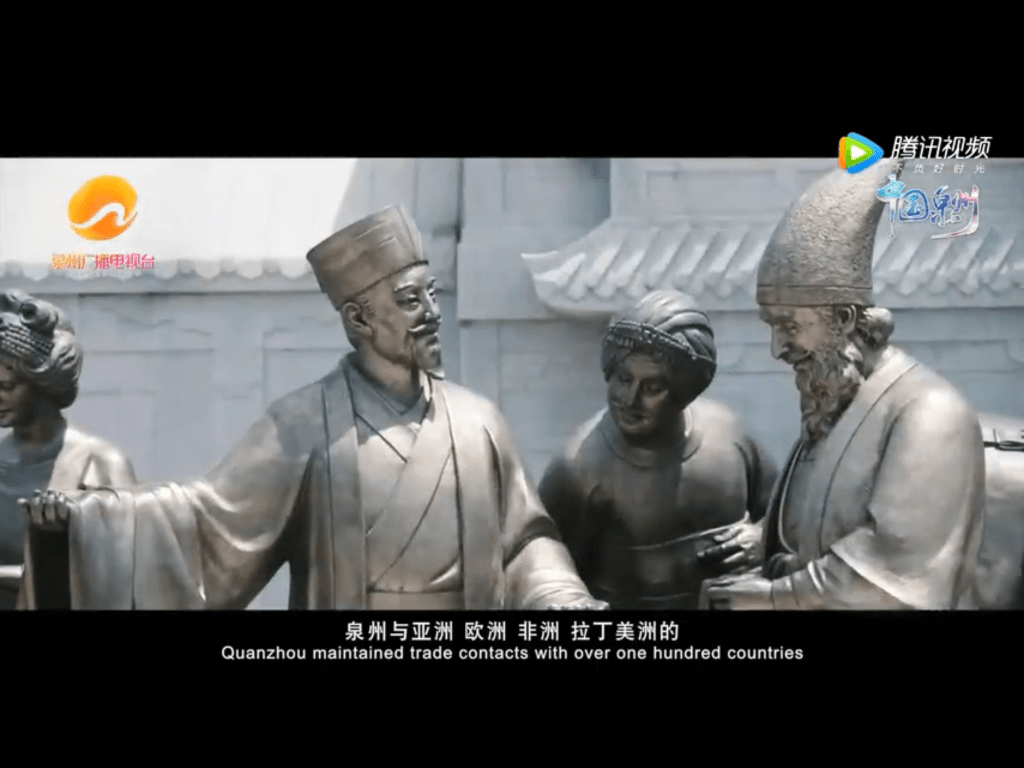
Ceramics or Chinese porcelain is one of the reasons why Quanzhou became a multicultural city. It was one of the biggest exports that China traded with its trading partners. Many of those partners sent out their traders, who decided to make Quanzhou their new home. By meeting with these traders, the decorative patterns mimicked the foreign trader’s culture and daily life. Later, under the Yuan Dynasty, the Persian traders brought colbalt to China. This metal later became the blue dye in qinghua porcelain, a porcelain that was made popular by Yuan Dynasty. It continued to be popular under the Ming, who traded this porcelain with the Europeans. That’s why porcelain is also called “China” because it came from China or in this case “Global China”.
Yibo, Y. (2006). Ceramics. China Online Museum. Retrieved 2020, from https://www.comuseum.com/ ceramics/





 My Content Resources